


Therapy of Dynamic Integration
An evolutionary method for the transformation and expansion of consciousness.
ID Therapy
The information obtained in Expanded States of Consciousness allows for the restructuring of the symptom's origin.
Dynamic Integration Therapy is based on attuning into an expanded state of consciousness that allows us to directly access the spiritual origin of conflicts. Through the channeling of spiritual guidance, we address each case precisely so that the client can construct the unique resolution their soul needs to integrate the learning.
This approach fosters transformation from the origin, generating rapid resolutions and lasting changes that manifest across all levels of experience (bio-psycho-socio-spiritual).
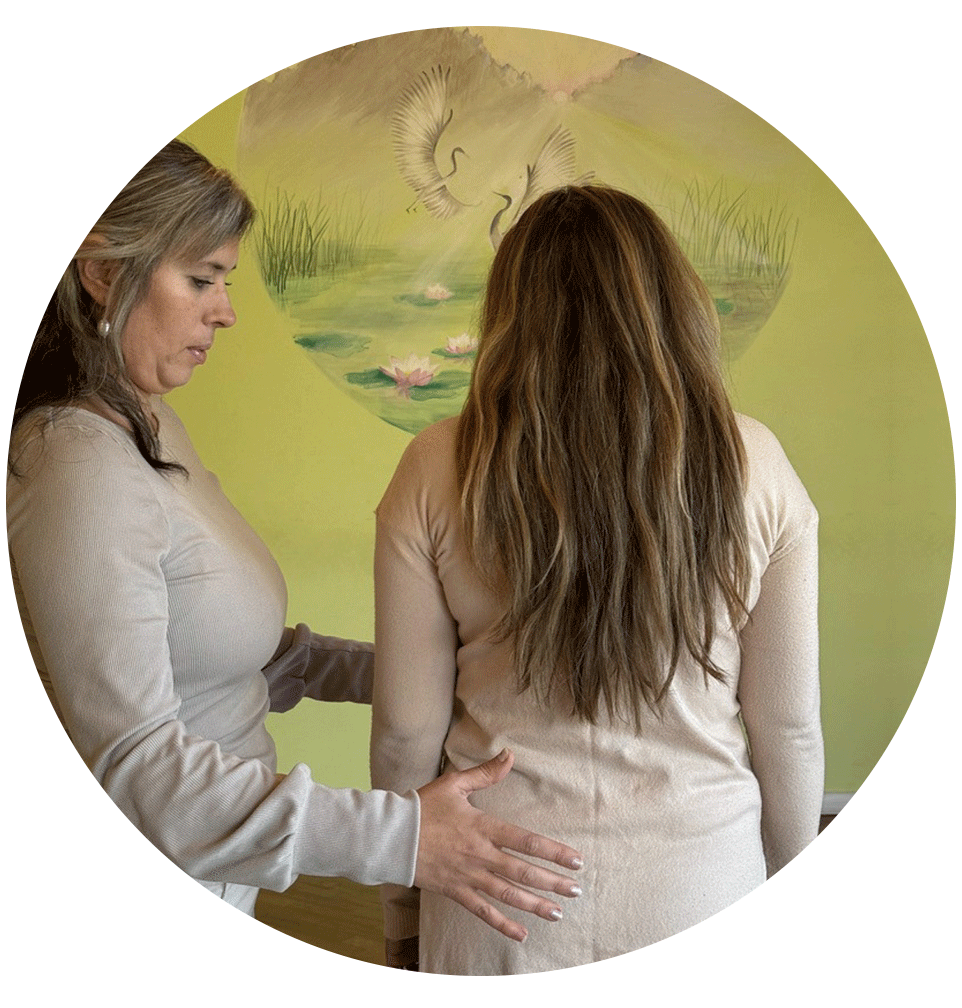
The Path: From Suffering to Wholeness
Suffering is often a restrictive state of consciousness where we perceive ourselves as isolated from others and from our own essence. Through Dynamic Integration, we gradually train perception to transcend rational thought, accessing direct experience and perceiving increasingly deeper layers of reality.
The process unfolds in three fundamental stages:
Bodily and Energetic Consciousness: We begin by expanding the sensitivity of internal physical sensations until perceiving the energetic field (biofield) and its constant flow.
Psychic Structure and Circulation: We build a strong and flexible self through the unblocking of the three basic axes of the energetic system: the Vertical Axis of the Self,, the Horizontal Social Axis, and the Anteroposterior Temporal Axis..
Spiritual Unfolding: As consciousness expands, we develop intuition, channeling capacity, tuning, and voluntary access to the spiritual plane.
Professional Training
The training is based on deep personal work of consciousness development and healing, guided by personalized mentorship oriented toward developing the necessary skills for the practice. These include supersensible perception, manual and voluntary management of energy, intuition, channeling, tuning, mediumship, the management of entities, and the knowledge of one's own spiritual guides, among others.
The training also carries a solid theoretical foundation that encompasses different schools of psychology (psychoanalysis, cognitive-behavioral, humanist, psychocorporeal, and transpersonal), neurosciences, and traditional mysticism of East and West. Furthermore, supervised therapeutic practices are conducted throughout the entire second year to ensure the quality of the professional practice of the graduates.